Thebes Essential
A connected introduction to ancient Thebes, beginning on the West Bank, pausing for lunch and continuing to the ceremonial East Bank.
View Journey →Discover Egypt
Ancient Thebes is not one monument. The east and west banks form a connected landscape of temples, royal tombs, private tombs, settlements, memorial temples and the modern city.
Why Luxor Matters
Luxor matters because the physical landscape still helps explain ancient Thebes: ceremonial temples and urban life on the east bank, royal and private funerary landscapes on the west bank, and the Nile between them.
Understanding Luxor
Read the Theban landscape as connected systems of kingship, ritual, burial, memory, work and community rather than as a list of famous monuments.
First Time
For a first visit, start with a coherent east-and-west-bank introduction. Then use focused half-day or specialist experiences to go deeper.
Selected Journeys
Choose by depth, time and interest rather than by how many stops fit into a day.
A connected introduction to ancient Thebes, beginning on the West Bank, pausing for lunch and continuing to the ceremonial East Bank.
View Journey →Discover where pharaohs prepared for eternity through the royal and memorial landscape of Luxor’s West Bank.
View Journey →Meet ancient Thebes through the lives of workers, artists, officials and families beyond the famous royal monuments.
View Journey →Find Your Luxor
Places
The Valley of the Kings was a principal royal burial place during the New Kingdom. Individual tomb access changes, so a strong visit focuses on the necropolis as a whole and chooses open tombs according to archaeology, physical access and current conditions.
Hatshepsut’s memorial temple at Deir el-Bahari rises in terraces against the western cliffs. Architecture, kingship, cult and landscape are inseparable here, making the temple one of the clearest places to discuss royal memory on the Theban West Bank.
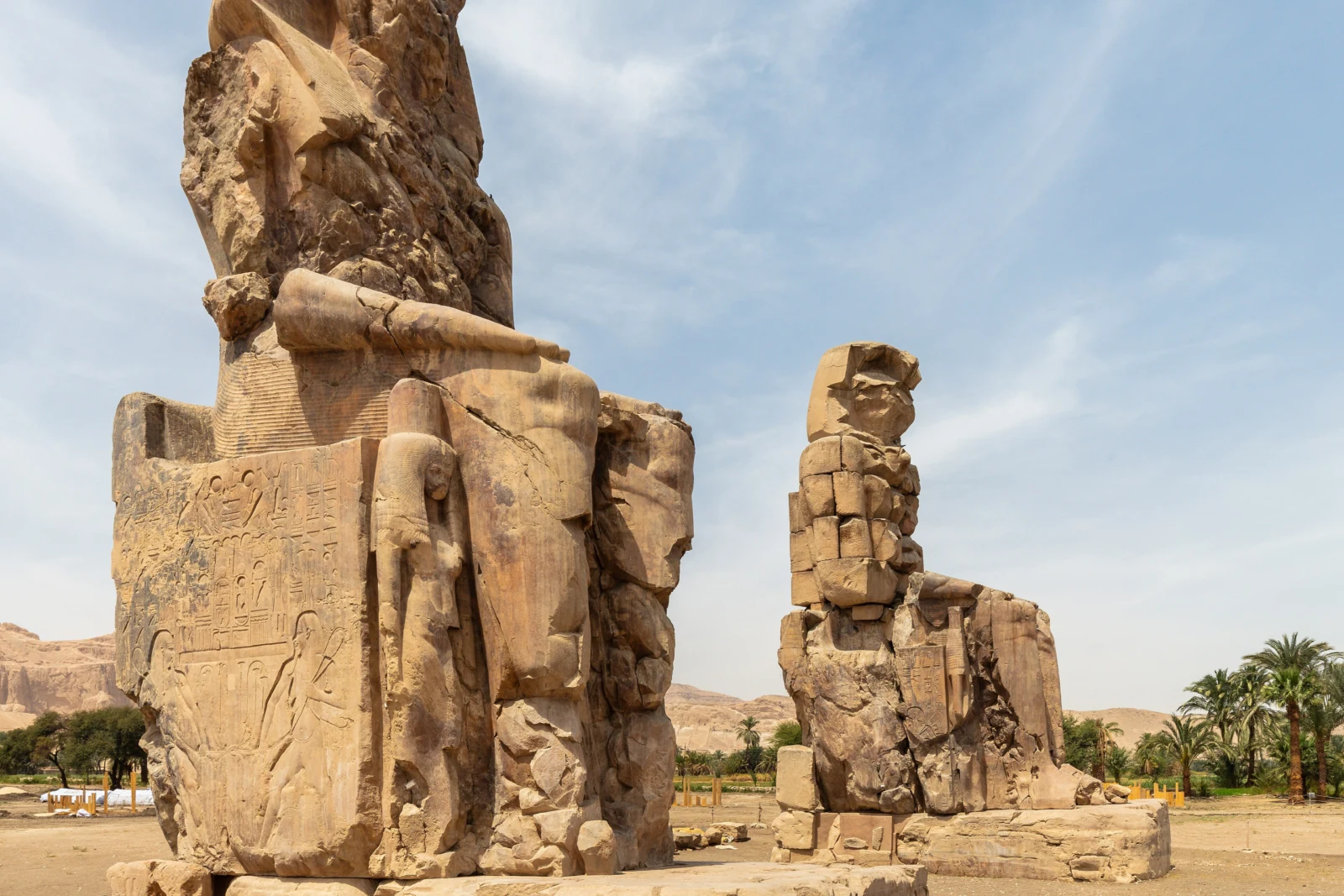
The Colossi of Memnon are two monumental seated statues of Amenhotep III that once stood before his vast memorial temple. They are useful not as an isolated photo stop, but as evidence for the scale of a largely lost royal complex.
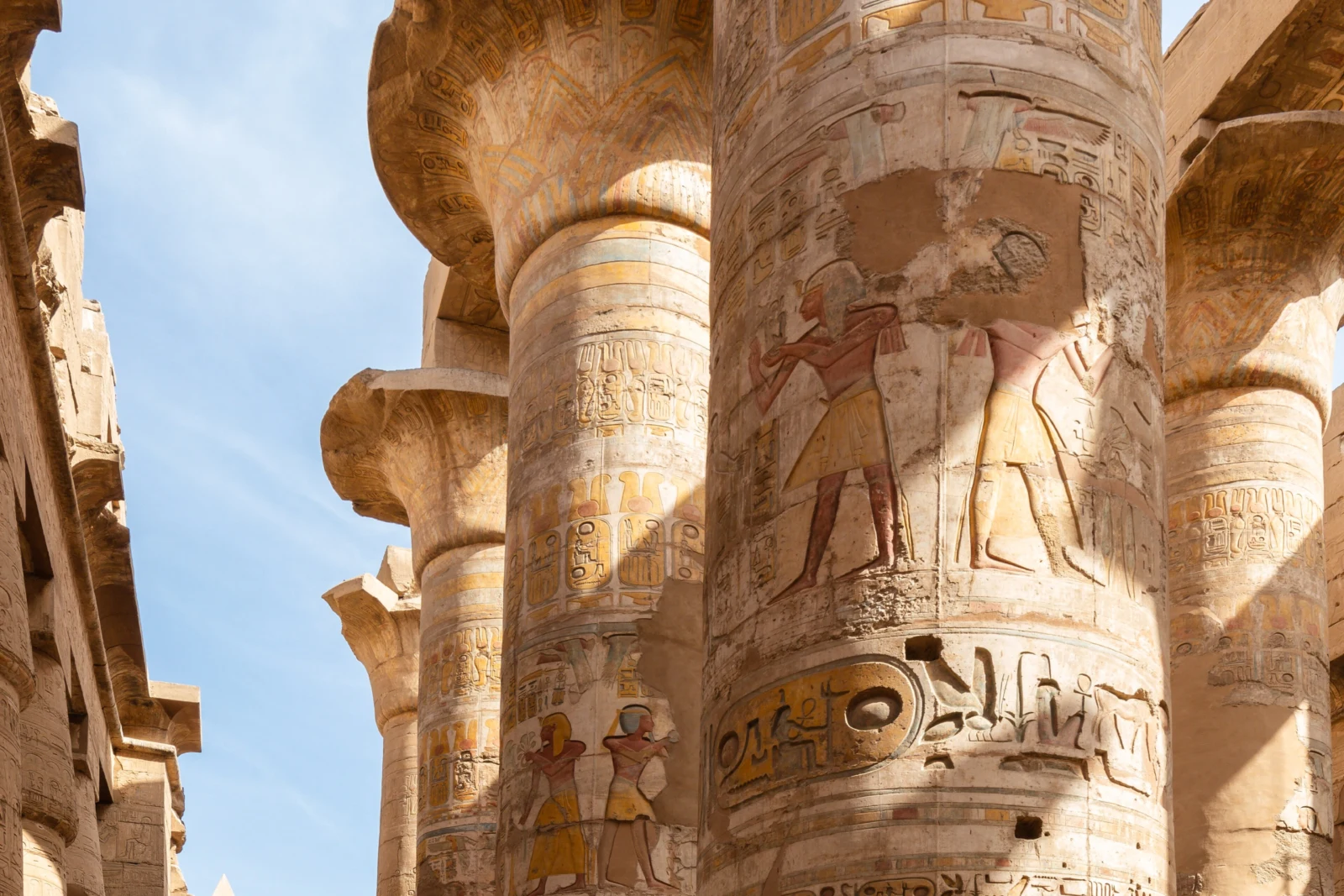
Karnak is a vast temple complex developed over many reigns, with the cult of Amun at its core. Courts, pylons, obelisks, sanctuaries and processional routes make sense when read as successive layers of royal and religious activity.
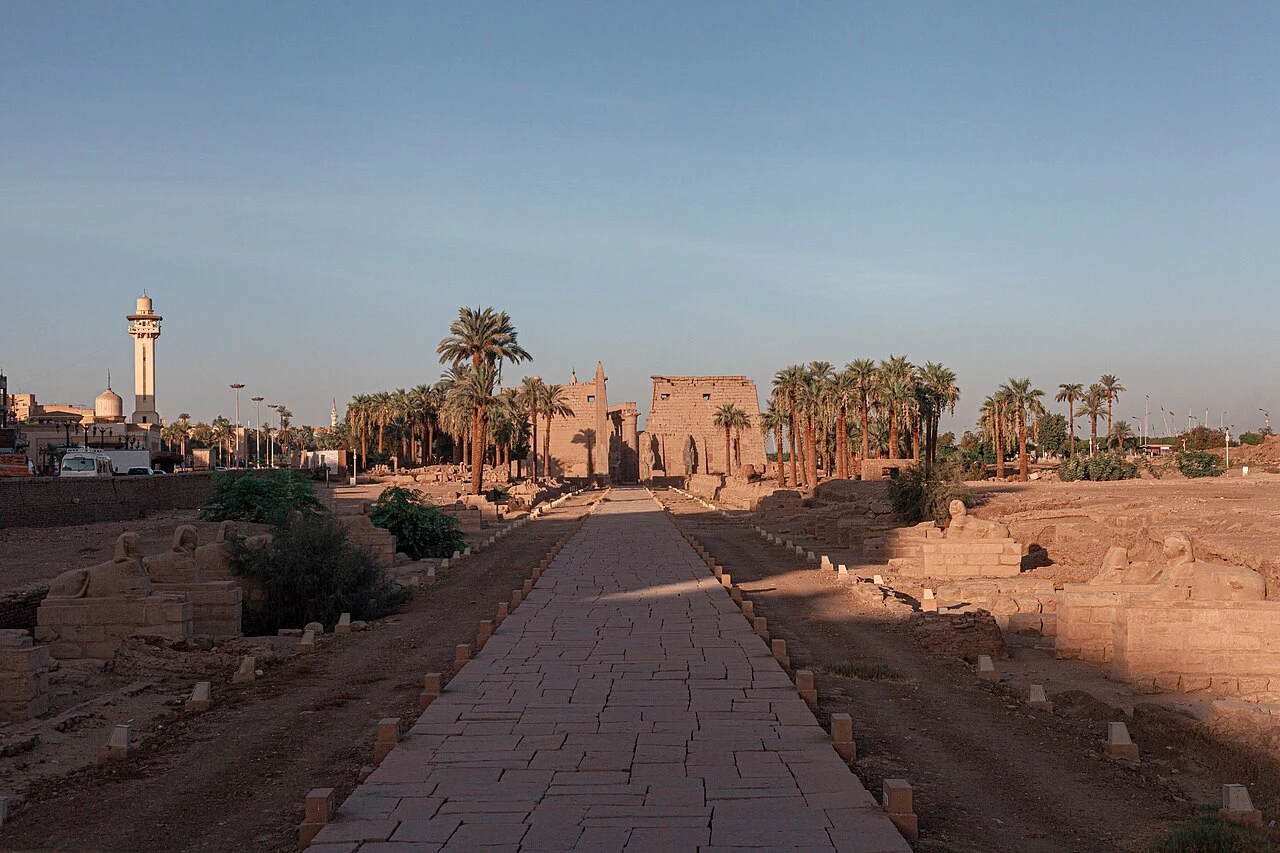
Luxor Temple stands at the southern end of the ancient processional connection with Karnak. Its architecture and later reuse make it especially valuable for understanding how one sacred place could remain important across very different periods.
The processional avenue connected Karnak and Luxor Temple across the ceremonial city. Its archaeological value lies in that relationship: it helps explain movement, festival and sacred geography rather than functioning as an isolated attraction.
Living Egypt
Luxor is also a living city with fields, villages, river crossings, workshops and neighborhoods around the archaeological landscape.
Planning
Two to three days is a strong first framework; more time rewards repeat visitors and anyone interested in private tombs, Deir el-Medina, Dendera or deeper archaeology.
Planning
Heat, tomb rotations, special tickets, physical effort and the difference between east-bank and west-bank geography all affect planning.
Practical
Tomb access and special-entry conditions can change. Avoid permanent promises about which individual tomb is open.
Journal & Academy
Planning and Egyptology content connect directly to the destination.
Continue Through Egypt
Start with the destination, then build a route that makes sense across Egypt.